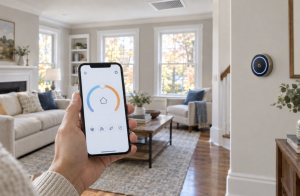
Your phone is smart. Your car is smart. Even your refrigerator may be smart enough to tell you when you’re running low on milk. So, what about the equipment responsible for keeping your home comfortable?
Smart HVAC technology has come a long way from the first programmable thermostats. Today, connected HVAC equipment can learn household patterns, respond to changing conditions, provide remote access, alert you to potential problems, and integrate with other smart devices throughout your home.
For homeowners throughout the Mid-Atlantic—where temperatures can swing from freezing winters to hot, humid summers—those capabilities can translate into greater comfort, improved efficiency, and more control.
Here’s what’s new in smart HVAC systems and which upgrades may be worth considering for your home.
Related: HVAC Innovations: What’s New and What’s Worth Installing?
1. Smart Thermostats Are Getting Smarter
A smart thermostat is still one of the easiest ways to bring more intelligence to an existing HVAC system.
Many of today’s models go well beyond allowing you to change the temperature from your phone. Depending on the model and HVAC equipment, features may include occupancy sensing, learning your household’s schedule, energy-use reporting, humidity monitoring, and automatic adjustments designed to reduce unnecessary heating and cooling.
Some newer models also use algorithms or AI-enabled features to analyze patterns and make more sophisticated adjustments over time.
Professional smart thermostat installation is particularly important if you have a heat pump, multi-stage equipment, dual-fuel system, or other advanced HVAC setup. Not every thermostat is compatible with every system, and proper installation helps ensure you get the functionality you’re paying for.
For many homeowners, smart thermostat installation is a relatively affordable place to start compared with replacing major HVAC equipment.
Related: Saving Energy When You’re Away: A Smart Thermostat Can Make a Big Difference
2. Your HVAC System Can Keep an Eye on Itself
Imagine knowing your air conditioner is beginning to have trouble before it stops working on a 95-degree afternoon.
Remote system monitoring is making that increasingly possible by letting you know what your system is doing right now.
Depending on the equipment, connected smart HVAC systems can monitor operating conditions and provide information about system performance. Some can alert homeowners—or potentially their HVAC professionals—to conditions that may warrant attention.
That might include abnormal operating patterns, temperature problems, filter reminders, or other system-specific alerts.
The benefit isn’t just convenience. Catching certain issues earlier may allow you to address a smaller problem before it contributes to a breakdown or puts additional stress on other components, which leads to the invaluable step of predictive maintenance.
3. Predictive Maintenance Is the Next Step
Traditional HVAC maintenance is generally preventive: you service equipment regularly to help reduce the likelihood of future problems.
Predictive maintenance adds another layer. Advanced connected equipment can use operating data and sensors to identify changes or patterns that may indicate developing problems. Instead of simply waiting for something to fail, homeowners and technicians can potentially use that information to determine when a system needs attention.
It’s important to distinguish predictive alerts from a professional diagnosis. Your HVAC equipment isn’t replacing your technician. Rather, connected technology can provide additional information that may help a trained professional diagnose problems more efficiently.
For homeowners investing in higher-end smart HVAC systems, these monitoring capabilities are worth asking about.
4. Smart HVAC Vents Offer More Room-by-Room Control
Have one bedroom that’s always too warm while another is freezing? Uneven temperatures are common, particularly in older Mid-Atlantic homes, additions, and multistory houses.
Smart HVAC vents are designed to help manage airflow room by room. Some systems use motorized registers along with room sensors to adjust airflow based on temperature, occupancy, or other conditions.
However, smart HVAC vents aren’t right for every home. Closing too many vents can affect airflow and static pressure in a ducted HVAC system, potentially reducing performance or creating equipment problems. That’s why it’s wise to have a qualified HVAC professional evaluate your ductwork and equipment before installing automated vents throughout your home.
Sometimes the better solution may be duct modifications, system balancing, zoning, or a ductless mini-split.
5. HVAC Is Becoming Part of the Connected Home
One of the biggest changes in smart HVAC isn’t a single piece of equipment; it’s connectivity.
HVAC technology can increasingly integrate with broader smart home installation systems. Depending on the devices and platforms you select, thermostats, indoor air quality monitors, humidifiers, dehumidifiers, lighting, shades, security devices, and voice assistants may be able to work together.
For example, a compatible home automation system might recognize that you’ve left for work and adjust the thermostat accordingly. When you’re heading home, it can begin returning the house to your preferred temperature.
If you’re planning a larger smart home installation, thinking about HVAC from the beginning can help you build a more cohesive system rather than accumulating individual devices that don’t communicate well with one another.
Which Smart HVAC Upgrades Are Worth It?
You don’t necessarily need the latest technology everywhere. The right investment depends on your home, existing equipment, budget, and what you’re trying to accomplish.
If you primarily want greater control and potential energy savings, smart thermostat installation may be the logical first step.
If you struggle with significant room-to-room temperature differences, professionally designed zoning or smart HVAC vents may be worth exploring.
If you’re already replacing an aging furnace, heat pump, or air conditioner, it may make sense to compare smart HVAC systems that include connected controls, monitoring, and advanced variable-speed capabilities.
And if you’re renovating or planning a broader smart home installation, that’s an ideal opportunity to consider how heating, cooling, ventilation, indoor air quality, lighting, and other systems can work together.
Make Your Home Smarter—Not More Complicated
The best smart technology should make home comfort simpler. You shouldn’t need five apps, three control panels, and an engineering degree just to cool down the bedroom.
That’s where choosing the right equipment and installing it correctly makes a difference.
Superior HVAC can help Mid-Atlantic homeowners evaluate smart thermostats, connected HVAC equipment, zoning solutions, and other comfort technologies based on their existing systems, homes, and budgets.
From smart thermostat installation to more comprehensive smart HVAC upgrades, our team can help you select and professionally install technology that delivers useful features without paying for ones you don’t need.
Thinking about making your HVAC system smarter? Contact Superior HVAC & Plumbing to explore the options that can help make your home more comfortable, efficient, and connected.