Life in the Mid-Atlantic has plenty to love, but August humidity isn’t usually high on the list. Whether you own a historic rowhome, a Colonial, a Cape Cod, or a newer home, condo, or townhome, keeping every room comfortable can be a challenge.
Many homes throughout Maryland, Northern Virginia, and the Washington, DC area were built long before central air conditioning became the norm. Others have been expanded over the years with finished basements, bonus rooms, garages, or sunrooms that never quite seem to cool down. If you’ve ever walked from one room that’s perfectly comfortable into another that’s five or ten degrees warmer, you’re not alone.
A ductless mini-split system offers an efficient, flexible way to solve those hot spots without the expense and disruption of installing new ductwork. In fact, today’s mini-splits rank among the most power efficient air conditioners available since they’re moving heat rather than generating it, making them an increasingly popular choice for homeowners throughout the region.
What Is a Ductless Mini-Split?
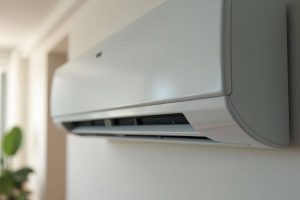
A ductless mini-split system provides heating and cooling without relying on traditional air ducts.
Instead, it uses two main components:
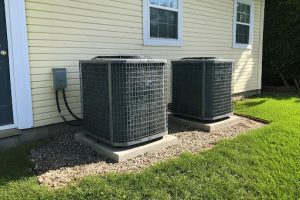
- A compact outdoor compressor/condenser that’s close to the size of a box fan and smaller than a traditional ducted heat pump’s outdoor unit
- One or more indoor air-handling units mounted on a wall, ceiling, or floor, each with its own thermostat for precise control
The two units are connected by a small conduit that carries refrigerant lines, electrical wiring, and a condensate drain. Since the connection only requires a small opening through an exterior wall, ductless mini-split installation is typically much faster and much less invasive than adding ductwork throughout a home.
Many mini-split systems also provide both heating and cooling, making them a practical year-round comfort solution for our region’s hot summers and chilly winters.
Why Mini-Splits Are a Great Fit for Mid-Atlantic Homes
Older homes throughout Maryland, Northern Virginia, and Washington, DC often present unique HVAC challenges.
You may have:
- A historic home where adding ductwork would require major renovations
- A finished attic that’s always too warm in the summer
- A basement that stays damp and cool year-round
- A home addition that’s never been connected to your existing HVAC system
- A sunroom that’s comfortable in spring but unbearable in August
- A detached space like a shed or studio that needs climate control
Mini-splits excel in these situations because they deliver conditioned air directly where it’s needed instead of relying on an existing duct system. They’re also an excellent option for homeowners who don’t want to tear into walls or ceilings just to improve comfort.
Related: HVAC Innovations: What’s New and What’s Worth Installing?
Zoned Comfort Means Everyone Wins
One of the biggest advantages of mini-splits is individualized temperature control. Each indoor unit operates independently, allowing different rooms to have different thermostat settings. Let’s say someone works from a home office all day while another family member prefers a cooler bedroom at night. Each space can be adjusted without affecting the rest of the house.
That’s especially valuable during the Mid-Atlantic’s long warm season, when your AC may be running from late spring well into early fall.
Instead of cooling your entire home to satisfy one uncomfortable room, you can cool only the spaces you’re actually using.
Exceptional Energy Efficiency
Mini-splits have earned a reputation as some of today’s most power efficient air conditioners for good reason. According to ENERGY STARⓇ, traditional central air systems can lose 20% to 30% of cooled air through leaky or poorly insulated ductwork. Ductless systems eliminate those losses by delivering cooled air directly into each room.
Many models also feature inverter technology, which continuously adjusts compressor speed instead of repeatedly turning on and off. This results in:
- Lower energy consumption (15.2-35 SEER2 ratings vs. 15.2-25 with ducted heat pumps, according to the DOE)
- More consistent indoor temperatures
- Better humidity control
- Quieter operation
- Reduced wear on the system
Considering the extreme heat and humidity homeowners experience each summer, improved efficiency can translate into meaningful utility savings.
What to Expect During Mini-Split Installation
One reason homeowners choose mini-split installation is how little disruption it causes. Since they don’t involve opening walls or ceilings, mini-splits require only a small opening to connect the indoor and outdoor units. So depending on your home’s layout and the number of indoor units needed, many installations can be completed in just one or two days.
Professional ductless mini-split installation includes evaluating each room for proper unit placement, sizing the equipment correctly, and ensuring the outdoor unit has adequate airflow for reliable operation. A properly designed system will deliver consistent comfort while maximizing energy efficiency.
Understanding Mini-Split Installation Cost
Naturally, one of the first questions homeowners ask is about mini-split installation cost.
Several factors influence the total investment, including:
- Number of indoor units
- Home size and layout
- Equipment efficiency
- Electrical requirements
- Installation complexity
The upfront cost is generally higher than installing a window AC or portable unit. However, mini-splits often provide greater comfort, quieter operation, lower monthly energy bills, and a cleaner appearance.
Depending on your home’s needs, they can also be a smart choice for replacing your home AC unit. A professional evaluation can help determine whether a mini-split, a central air replacement, or a hybrid approach makes the most sense for your home.
Related: Now’s the Time to Save on Heating
Is a Mini-Split Right for You?
If you’re tired of uneven temperatures, looking to improve comfort in a specific room, or considering replacing your home AC unit, a ductless mini-split may be the flexible solution you’ve been searching for.
The best option depends on your home’s construction, your family’s comfort preferences, and your long-term energy goals. Every home is different, which is why expert guidance is so valuable.
At Superior HVAC & Plumbing, we help homeowners throughout Maryland, Northern Virginia, and the Washington, DC region find the right comfort solution for their homes. Whether you’re exploring mini-split installation, comparing mini-split installation costs, or deciding between a ductless system and traditional central air, our experienced technicians can walk you through your options and recommend a solution that fits your home, your lifestyle, and your budget.
Reach out to Superior HVAC & Plumbing today to schedule a consultation. Discover how a ductless mini-split system can deliver personalized comfort, improved efficiency, and reliable performance through every Mid-Atlantic season.