The holidays are coming. So are the relatives, the overnight guests, the extra cooking, the back-to-back showers—and possibly that one person who always seems to be adjusting your thermostat.

Hosting can be wonderful, but admittedly, it can also be stressful. The last thing you need is a slow-draining sink, a toilet that won’t cooperate, or a heating system that chooses the middle of dinner to call it quits.

Before the doorbell rings, give your home’s HVAC and plumbing systems a little attention that will go a long way. Addressing these five common trouble spots can help keep everyone comfortable and prevent minor problems from becoming holiday headaches.

1. Clear That Slow-Draining Sink

You’ve noticed it for weeks: the water eventually disappears, so you’ve put off dealing with it. But a slow-draining sink can become a bigger problem when holiday cooking and extra guests dramatically increase the amount of water, food particles, grease, hair, and other debris going down your drains.

Before guests arrive, check sinks, tubs, and showers throughout the house. Remove visible debris from drain openings and clean accessible strainers or stoppers. Drain strainers are an inexpensive way to catch food and hair before they enter your pipes.

Avoid pouring grease, fats, or oils down your kitchen sink—even if you’re following them with hot water. They can cool and solidify inside the plumbing, contributing to clogs.

If several drains are running slowly at once, call a plumber. That could indicate a problem deeper in your plumbing system.

Related: The Emergency Plumbing Kit Every Homeowner Should Have

2. Address Toilet Issues Before Everyone Arrives

Your bathrooms are about to get considerably busier, so give every toilet a test run.

Check around the base for moisture or water, which could signal a failing seal or another leak. Listen for a toilet that continues running after it has been flushed. A worn flapper or another relatively simple problem can waste water and may worsen over time.

A slow-draining toilet deserves attention, too. If the bowl fills unusually high, drains slowly, or requires multiple flushes, you could have a partial blockage. Don’t wait for a house full of guests to discover that it has become a complete one.

If you’re experiencing recurring toilet issues or a slow-draining toilet that a plunger doesn’t resolve, professional plumbing service can help identify the underlying problem.

And here’s one simple holiday-hosting tip: keep a plunger where guests can easily find it. Everyone will appreciate the discretion.

3. Make Sure Your Water Heater Is Up to the Challenge

Normal household hot-water demand can suddenly soar when company stays over. Add a few extra showers to all those dishes and loads of laundry, and your water heater may struggle to keep pace.

Before guests arrive, look around your water heater for leaks, corrosion, or unusual signs of wear. Pay attention to inconsistent temperatures, unusual sounds, discolored hot water, or a hot-water supply that seems to run out faster than it used to.

These can be signs that water heater repair is worth investigating before holiday demand increases.

If your water heater is older or already struggling, don’t simply turn its temperature way up in hopes of getting more hot water. The U.S. Department of Energy recommends a water-heater temperature of 120°F for most households, which can help reduce energy use and the risk of scalding.

We can help. Superior HVAC & Plumbing can inspect your equipment and determine whether water heater repair, maintenance, or replacement makes the most sense.

Related: Holiday Ready HVAC: How to Prep Your System for Prime Time

4. Change Your HVAC Air Filter

Your HVAC system already works hard during a Mid-Atlantic winter. Add a house full of people, doors opening and closing, holiday cooking, and fluctuating outdoor temperatures, and maintaining consistent comfort can become more challenging.

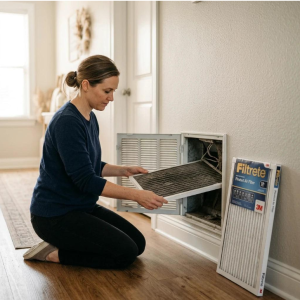
One of the simplest things you can do is check your HVAC filter. A dirty filter can restrict airflow and force your heating system to work harder. Depending on your filter type, equipment, pets, and household conditions, it may need replacement more frequently during periods of heavy use.

A fresh filter can support good airflow and system performance while helping capture airborne particles. If you’ve changed the filter but still notice uneven temperatures, unusual noises, frequent cycling, weak airflow, or unexpectedly high utility bills, those may point to larger HVAC system issues that warrant professional attention. Investigate those early. 

5. Check Your Outdoor HVAC Equipment

Your outdoor HVAC equipment needs attention during the colder months, too.

If your home uses a heat pump, the outdoor unit continues working throughout winter. Leaves, twigs, vegetation, and other seasonal debris can interfere with airflow.

Inspect the area around the unit and carefully remove loose debris. Keep nearby shrubs and vegetation trimmed back, and don’t pile leaves, firewood, holiday decorations, or other items against the equipment.

If you notice excessive ice buildup, unusual sounds, or other performance problems, don’t try to dismantle or repair the unit yourself. Have a professional assess potential HVAC system issues instead.

Give Yourself One Less Thing to Worry About

You can’t guarantee that the turkey will be perfect, everyone will arrive on time, or nobody will bring up that story from ten holidays ago. 

But you can take a few simple steps to help your home handle the extra activity:

  • Clear the slow-draining sink. 
  • Investigate toilet issues. 
  • Make sure you don’t need water heater repair. 
  • Change your air filter. 
  • Give your outdoor HVAC equipment a quick inspection.

If you’d rather have a professional make sure everything is guest-ready, Superior HVAC & Plumbing is here for you. Call our team today to be ready for the festive frenzy. From plumbing concerns and water heater repair to heating maintenance and other HVAC system issues, our experienced team can help you address problems before they interfere with the festivities.

Because when the doorbell rings, you should be thinking about who’s at the door—not what’s happening in the utility room.
When your water heater starts showing its age, it’s tempting to replace it with whatever you’ve always had. But today’s homeowners have more choices than ever before, and one of the biggest decisions is whether to stick with a traditional storage tank or upgrade to a tankless system.

If you live in the Mid-Atlantic area, your water heater works hard year-round, from hot showers on chilly winter mornings to extra laundry, dishes, and guests during the summer. Choosing the right system can improve comfort, lower energy costs, and even free up valuable space in your home.

So, when it comes to a tankless vs. tank water heater system, which one is the better fit? The answer depends on your household’s hot water needs, your budget, and your long-term goals.

How Traditional Tank Water Heaters Work

A traditional water heater stores hot water in an insulated tank, typically holding between 40 and 80 gallons. The unit continuously heats the stored water so it’s ready whenever you turn on a faucet.

When hot water is used, the tank refills with cold water and reheats it for the next use.

Pros of Tank Water Heaters

Traditional tanks remain popular for several reasons:

  • Lower upfront purchase and installation costs
  • Straightforward replacement if you’re already using a tank system
  • Reliable performance for average households
  • Easier and less expensive repairs in many cases

For many homeowners, especially those replacing an aging unit with minimal modifications, a storage tank remains a practical and dependable solution.

Cons of Tank Water Heaters

Tank systems also have some limitations.

Because they store a finite amount of hot water, large families may occasionally run out during periods of heavy use. They also use energy throughout the day to maintain water temperature (even when no one is using hot water).

In addition, the storage tank takes up more floor space and generally has a shorter lifespan than many tankless models.

How Tankless Water Heaters Work

Rather than storing hot water, tankless systems heat water only when you need it.

When you turn on a hot water tap, cold water passes through a heat exchanger that rapidly warms it before delivering it directly to your fixtures.

Since there’s no storage tank, homeowners enjoy a nearly endless supply of hot water (as long as the system is properly sized for the household).

This on-demand operation is one of the biggest benefits of tankless water heater technology, but there are many other benefits as well. 

Benefits of Tankless Water Heaters

Many Mid-Atlantic homeowners are choosing tankless systems because they offer several attractive advantages.

Endless Hot Water

If your family often schedules back-to-back showers, runs the dishwasher while doing laundry, or frequently hosts guests, a properly sized tankless unit can keep hot water flowing without waiting for a storage tank to recover.

Improved Energy Efficiency

Since tankless systems only heat water when it’s needed, they eliminate the standby heat loss associated with storage tanks. That can translate into lower utility bills over time, particularly for households with moderate hot water usage.

Longer Equipment Life

While many traditional tank water heaters last around 8 to 12 years, tankless systems often provide 15 to 20 years (or even longer with proper care).

Compact Design

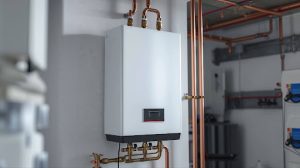
Without a large storage tank, tankless units mount neatly on a wall and require significantly less floor space, making them ideal for smaller utility rooms, finished basements, or mechanical closets.

Related: HVAC Innovations: What’s New and What’s Worth Installing?

Tankless Water Heater Maintenance

Like any appliance, tankless systems perform best with routine care. Regular tankless water heater maintenance helps prevent mineral buildup inside the heat exchanger, especially in areas with hard water, and keeps the system operating efficiently.

Annual flushing is often recommended, along with periodic inspections to ensure safe, reliable performance.

Traditional tanks also benefit from maintenance, including sediment flushing and anode rod inspections, but tankless units generally require more consistent preventive service to maintain peak efficiency.

Understanding Tankless Water Heater Cost

One of the biggest considerations for homeowners is the tankless water heater cost.

While prices vary depending on the home’s plumbing, gas or electrical service, as well as installation complexity, here are some general ranges:

Traditional Tank Water Heater

  • Equipment: approximately $700–$1,500
  • Installation: roughly $1,500–$3,000

Tankless Water Heater

  • Equipment: approximately $1,000–$2,500
  • Installation: roughly $2,500–$6,000 or more, depending on venting, gas line upgrades, electrical work, and installation requirements

Although tankless systems typically require a higher initial investment, many homeowners offset that cost through improved efficiency, longer equipment life, and lower operating expenses over time.

Tankless vs. Tank Water Heater: Which Is Best?

When comparing a tankless vs. tank water heater, there’s no universal winner. The right choice depends on how your household uses hot water.

A traditional tank may be the better option if you:

  • Want the lowest upfront investment
  • Already have a tank system in place
  • Have moderate daily hot water needs
  • Prefer a simpler replacement process

A tankless system may be the better fit if you:

  • Want maximum energy efficiency
  • Frequently run out of hot water
  • Have a larger family or higher daily demand
  • Plan to stay in your home for many years
  • Want to save space and enjoy a longer equipment lifespan

Ultimately, the tankless vs. tank water heater decision comes down to balancing installation costs with your long-term comfort and efficiency goals.

Related: Plumbing Resolutions: Water Saving Devices and Habits

Let Superior HVAC & Plumbing Help You Find the Right Solution

Choosing between a traditional storage tank and a tankless water heater doesn’t have to be overwhelming. Every home is different, and the best system depends on your household size, water usage habits, existing plumbing, and budget.

At Superior HVAC & Plumbing, we help homeowners throughout Maryland, Northern Virginia, and Washington, DC evaluate all their options with honest, expert guidance. 

Whether you’re interested in learning more about tankless water heater costs, exploring the benefits of tankless water heater technology, or deciding on what kind of water heater is best, our experienced team can recommend and install the solution that best fits your home. Contact Superior HVAC & Plumbing today to schedule a consultation and enjoy dependable hot water for years to come.

Plumbing issues have a way of showing up at the worst possible time. Whether it’s a clogged drain, a leaking pipe, or an unexpected overflow, being prepared can make all the difference. That’s why every homeowner should have a well-stocked emergency plumbing tool kit on hand.

Continue reading “The Emergency Plumbing Kit Every Homeowner Should Have”

A fresh year brings fresh opportunities, and what better way to kick things off than with resolutions that benefit your home, your wallet, and the planet? This year, consider adding a few simple plumbing habits to your list. Small changes in the way you use water – and the fixtures that supply it – can lead to major savings over time. From installing water saving devices to adopting smarter daily routines, these efforts not only protect your pipes but also support a healthier environment.

Continue reading “Plumbing Resolutions for the New Year: Water Saving Devices and Habits”

The grills are heating up, the citronella candles are lit, and the party invitations are flying out. From backyard BBQs and graduation parties to full-blown summer weddings under the stars, your home is about to see more action than it has all year. While you’re prepping your playlist and perfecting your potato salad, there’s one crucial detail you don’t want to overlook: your plumbing.

Continue reading “It’s Summer Party Season: Is Your Plumbing Ready?”

Spring is here, and while it ushers in warmer weather and blooming flowers, it also brings heavy rains, melting snow, and an increased risk of crawl space and basement flooding. Homeowners dread the added moisture; they know just a few inches of water can cause thousands of dollars in home flood damage, leading to structural issues, ruined furniture and belongings, and even dangerous mold growth. If your basement is at risk, now is the time to consider a sump pump installation.

Continue reading “It’s the Season of Flooding – Do You Need a Sump Pump?”